A Frank Chat With Barbosa Mateus
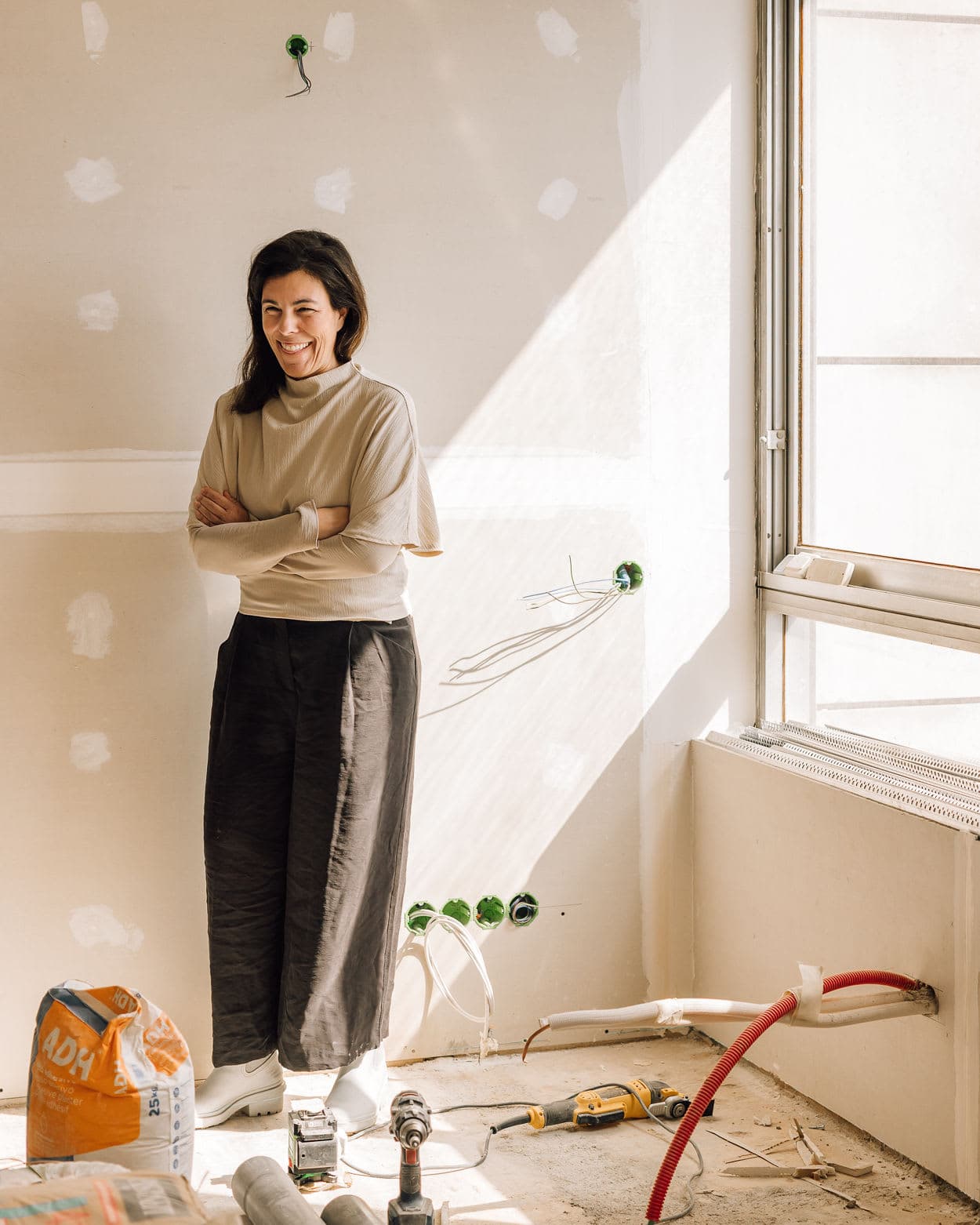
Mariana Barbosa Mateus is a Lisbon-based architect and founder of Barbosa Mateus Arquitectos.
Trained between Lisbon and London, her work is shaped by a careful attention to context, materiality and spatial atmosphere.
Invited to transform two former office spaces within Edifício Aviz, one of Lisbon’s most iconic modernist buildings, into residential apartments, Barbosa Mateus approached the project as an exercise in adaptation, continuity and atmosphere. In this interview, she reflects on the building’s original character, the shift from office to home, and what it means to inhabit the city from above.
Edifício Aviz is one of Lisbon’s modernist landmarks, originally conceived as an office tower at a moment of great optimism about the city’s future. When you first visited the space, what most intrigued or fascinated you about the existing structure?
The building is a defining presence in Lisbon’s skyline. For decades, it was the tallest in the city, an enduring modernist landmark. Apart from the retail ground floor, I had never experienced its interior before this project. What struck me immediately was how intact it felt.
The common areas, in particular, seemed almost untouched. Timber-lined corridors, mosaic stairwells, and, within the apartment, the slender raw aluminium window frames opening onto the skyline. These elements carried a quiet clarity and naturally guided our approach, anchoring the project in the building’s original modernist language.

Transforming a former office floor into a home implies a profound shift in scale and atmosphere. What were the essential architectural gestures in turning this place of work into a space for living?
While the shared spaces felt preserved, the apartment itself had lost its identity through successive alterations. We chose to strip it back to shell and core, creating a blank condition from which to rebuild. Revealing the concrete columns, previously hidden within partitions, became a defining gesture. Left exposed, they bring weight and rhythm to the space, grounding the apartment within the structural logic of the tower. In contrast, a continuous timber layer wraps the vertical surfaces, integrating storage and doors into a seamless plane. Set against a smooth cementitious floor, the palette is restrained and tactile, quietly resonating with the building’s character.

Being on the 15th and 16th floors creates a particular relationship with Lisbon, almost as if one were inhabiting the city’s skyline. How did the project seek to frame, or even choreograph, these views?
There is a remarkable sense of elevation, you understand why the building was once called Lisbon’s “eighth hill.” The city unfolds in every direction. Large windows in each room draw the skyline deep into the interior, making it part of the spatial experience. On the south side, the apartment was entirely reconfigured into a generous, open living space. Here, the layout becomes almost secondary to the view. A continuous frontage of glazing turns the room into an observation platform, with the horizon always present.
Your work often moves between architecture, interiors, and exhibition design. Does this scenographic way of thinking influence how you approach a residential project such as this one?
There is always a dialogue between these disciplines. Exhibition design often begins with a neutral space that is shaped through sequence and narrative. That same thinking carries into residential work: an attention to how spaces unfold, how movement is guided, and how certain elements are revealed over time. In this project, that approach is visible in the way the apartment gradually opens towards the views, and in how structure and material are exposed and composed. Even in a domestic setting, space is something to be experienced.

There is something unexpectedly poetic about living at the top of a modernist tower originally designed for offices. When you imagine the future inhabitants of these apartments, what kind of everyday life do you see unfolding there?
The apartment allows for different ways of living. Its layout is flexible, the current configuration can easily shift, even becoming two separate units. It suggests a very urban way of inhabiting the city.
A life lived on foot, closely connected to its surroundings, where the rhythm of the neighbourhood becomes part of the everyday.

Lisbon has been rediscovering many of its modernist buildings. Do you see projects like this as part of a broader movement to reinterpret the city’s architectural heritage for new ways of living?
Yes, and increasingly so. Architecture today is less about permanence and more about adaptation. The ability to shift between uses, office to residential, and vice versa, is becoming essential. Recent changes in the legal framework have made these transitions more accessible, opening up new possibilities within the existing city.


In that sense, projects like this are not just about preservation, but about continuity, allowing Lisbon’s built fabric to evolve in response to how we live now.
Imaviz is one of the apartments designed by Barbosa Mateus Arquitectos in Edifício Aviz, a former office space transformed into a contemporary home above Lisbon.
For Sale with Fantastic Frank Lisbon.
Read More
View All