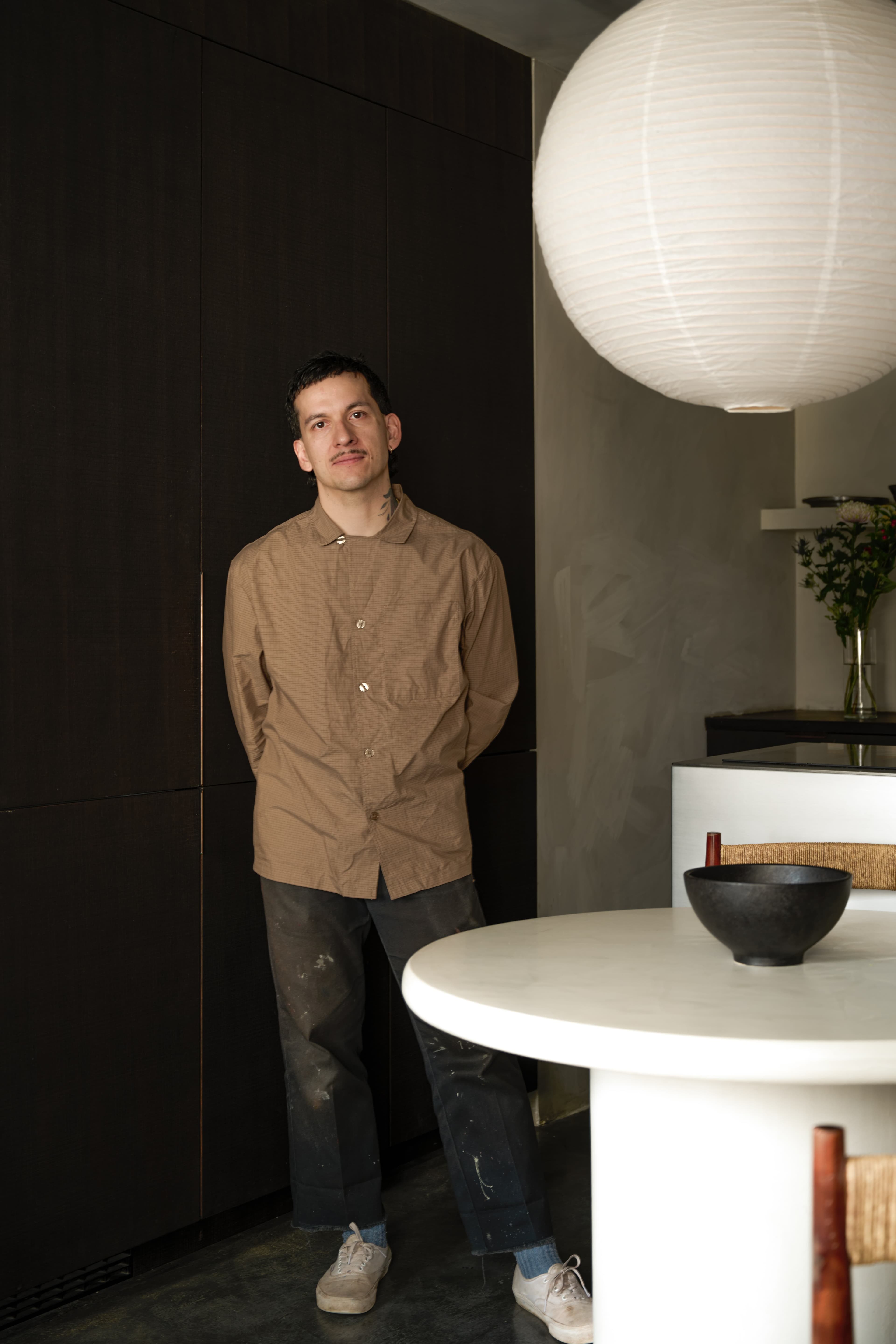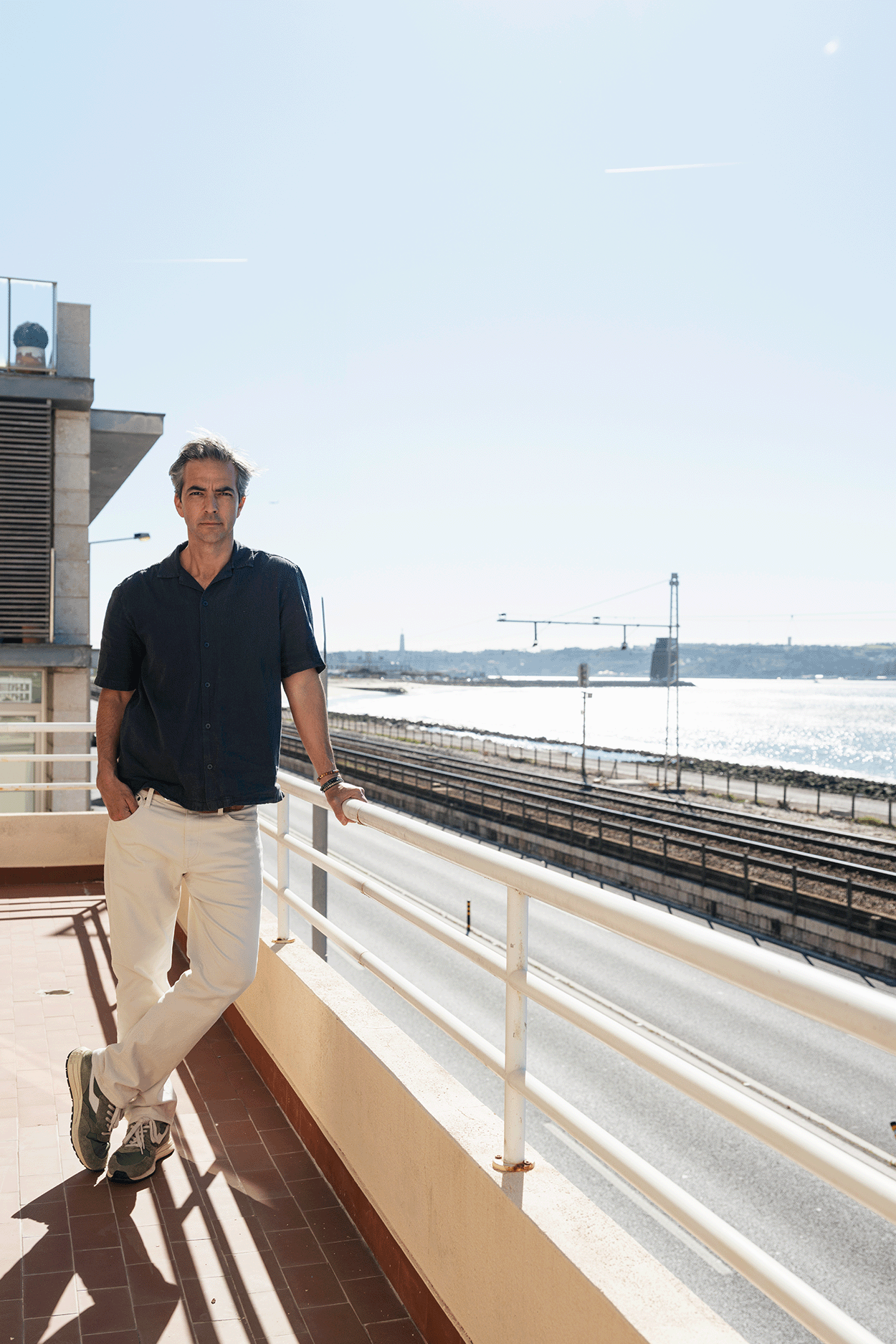
A Frank Chat With Pedro Ricciardi
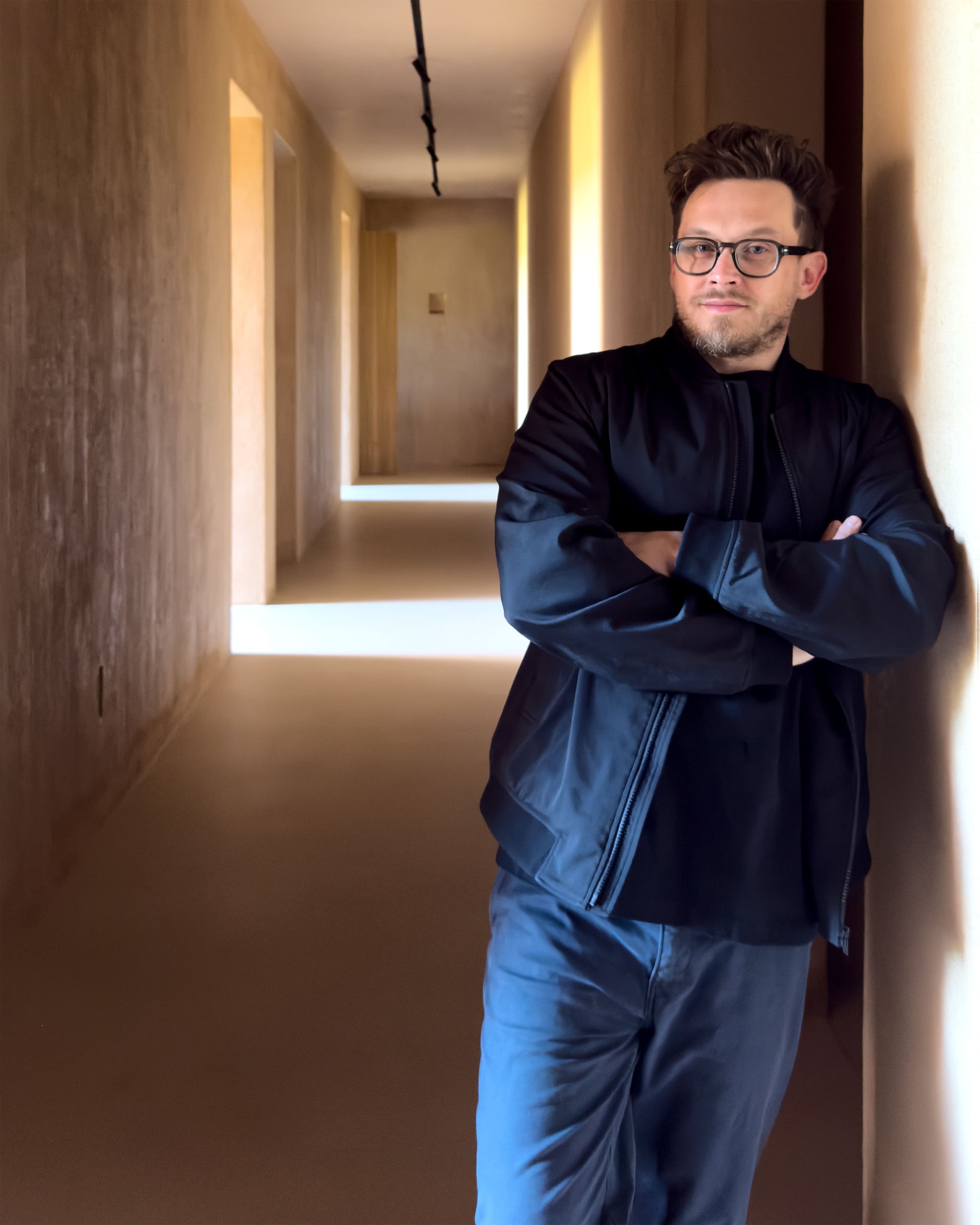
Pedro Ricciardi’s architecture is shaped by Lisbon, São Paulo and New York. Working across these three cities, he developed a language grounded in rigour, proportion, materiality and a contemporary understanding of how people live.
In Lisbon, he spent more than a decade working with João Luís Carrilho da Graça, where he built a strong conceptual foundation. In Brazil, at Isay Weinfeld’s office, he refined his sensitivity to proportion, movement and materiality. In New York, he was confronted with the scale, speed and demands of execution, overseeing major international projects.
Out of that journey came a practice that combines precision with lightness, discipline with intuition, and rigorous design with a finely tuned attention to the way people live. His architecture avoids noise and excess, favouring flow, light, material presence and a sense of timelessness that resists passing trends.
Casa do Chafariz is a particularly clear expression of that approach. Set in Lisbon, yet open to a more contemporary, fluid and outdoor-oriented way of living, the house reflects Pedro Ricciardi’s architectural language with clarity and ease, which is precisely why it holds a special place within Fantastic Frank’s universe.

You’ve worked extensively in Portugal, Brazil and the United States, including key years at Isay Weinfeld’s office. How has moving between these different architectural cultures shaped the way you approach residential architecture today?
I believe these experiences have played a fundamental role in shaping the way I see architecture, and they continue to influence how I approach and develop each project. Working with João Luís Carrilho da Graça in Portugal for eleven years was an extraordinary experience and laid the foundations of my architectural thinking. Later, working with Isay Weinfeld in Brazil shaped my understanding of proportion, movement and texture in architecture. New York, on the other hand, was all about turning projects into reality. It was very different from the places I had lived before, and it was there that speed, scale and discipline became essential to the way I work.

After working on large international projects, including hotels, residential buildings and restaurants, what motivated you to focus on a private house like Casa do Chafariz in Lisbon?
To be honest, I left New York to establish my own office in Portugal. It was a significant step, as I was starting entirely from scratch, without any projects. I began with small refurbishment works, but gradually larger opportunities emerged, including Casa do Chafariz, which was more ambitious in scale. I have always believed that, regardless of a project’s size, the same level of dedication is essential, from the initial concept to the smallest detail.
The house is intentionally understated. There is no architectural “gesture” competing for attention. Was that a conscious decision from the outset?
In my creative process, there are always several factors to consider. In this case, the client had a very clear vision. The challenge was to design a house using simple elements, moving away from extensive carpentry and wood panelling and, in a way, returning to the roots of architecture. We embraced that challenge and tried to create a house made of “nothing”. One of the most important elements of any good project is the layout, and the way spaces flow effortlessly into one another. The entire design was driven by a pursuit of simplicity, where the fewest possible elements are enough to define and bring a space together.
In cities like Lisbon, where private outdoor space is increasingly rare, how important is this connection to nature in contemporary urban living?
I believe the contemporary way of life is defined by the way we connect, both with others and with nature. The house is an extension of our thoughts, and it should express a seamless relationship between indoor and outdoor spaces. I strongly believe that outdoor areas are an extension of the project itself, and that they should work together with the architecture as one.
Many Brazilian clients are drawn to Lisbon but struggle to find houses that match their expectations in terms of space, comfort and layout. Do you see Casa do Chafariz as answering that gap?
The project was developed in a way that responds to a contemporary way of living. It was carefully considered to speak to a wide range of clients, including Brazilians. Perhaps because of my background, this comes quite naturally.

If you imagine this house being lived in 20 or 30 years from now, what do you hope will still feel relevant?
I certainly hope so. I truly believe that when you design a house, it should feel timeless; it should not reflect the moment in which it was created. If that is the case, then I believe we have done something right.
Lisbon has changed dramatically over the past decade. From an architect’s perspective, how do you see the city today in a European context?
A decade ago, Lisbon was a city lived in mostly by the Portuguese. Today, it has become a truly multicultural city, shaped by people from all over the world. That diversity is redefining Lisbon and giving it a distinct character, always with the hope that it does not erase the essence of the city we all love.
In architectural terms, I do believe things have changed, because we now work with different types of clients and different kinds of needs. But architecture goes beyond that. It is also a response to the site and to the regulations that shape our work.
These three elements, programme, location and legislation, form the foundation of any project. From there, other, more intangible factors come into play: a feeling, a moment, or an intuition that drives the idea forward and sustains it through to completion.
Step inside Casa do Chafariz, a distinctive home in Lapa neighbourhood, Lisbon, designed by Pedro Ricciardi.
For Sale with Fantastic Frank Lisbon.

Read More
View All