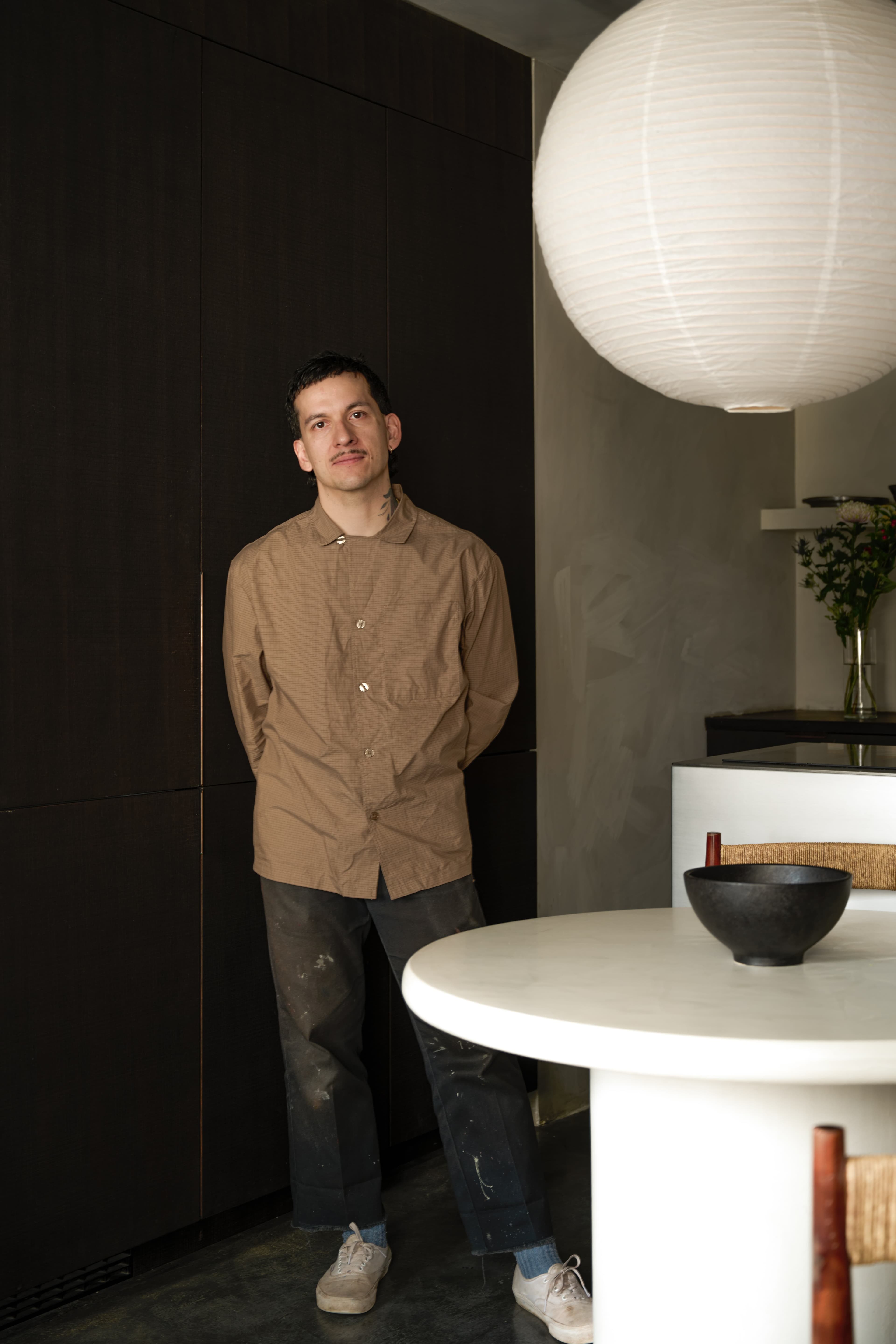
A Frank Chat with Quintana Partners
There is a particular sensitivity in the work of Quintana Partners that resists immediacy. Their interiors ask for time, for attention, and for a willingness to listen to what already exists. Rather than imposing form or style, their practice begins with observation of original architecture, of material memory, and of the narratives embedded within a place.
Based between Barcelona and Menorca, the studio moves fluidly between intimate domestic spaces and larger hospitality projects, yet their approach remains consistent. Each project starts from an understanding of a space’s existing character and history, and from there explores how a contemporary way of living can enter into dialogue with the past without erasing it. Materiality is never decorative, but purposeful, carrying texture, meaning and emotional weight.
We sat down with founders Benito Escat and Pol Castells to talk about their practice, their relationship to Menorca, and the ideas behind Hotel Casa Telmo, a house they originally transformed as their own home and studio before gradually opening it to others. Bringing many of the studio’s ideas into focus within a single, lived project, the house reflects their interest in narrative, material and memory. Today, it is presented by Fantastic Frank Menorca as Hotel 1886, and remains a expression of their way of working.
When you first encounter a space, what are you listening for?
We listen to the story of the place, its original architecture, its materials and its past. Before designing, we seek to understand what already exists and how it can enter into dialogue with a new way of living.
There is a subtle tension in your interiors, between refinement and rawness, imagination and restraint. How do you know when a space has found its balance?
Balance is achieved when the raw beauty of the original space is respected and enhanced through carefully considered interventions, without imposing an arbitrary style. When a space feels authentic and naturally resolved, we know it has found its equilibrium.

Materiality doesn’t seem decorative in your work; it feels purposeful and almost narrative. How do materials guide your decisions rather than simply complete them?
Materials are never chosen as decoration. They guide the project by carrying memory, texture and meaning. For us, materiality helps build a narrative and establishes a sensory and emotional connection with the space.
Your work appears largely untouched by trends. Is timelessness something you consciously pursue, or does it emerge naturally from your way of working?
Timelessness is a conscious pursuit, always paired with a subtle contemporary touch. We aim to create spaces that belong to their time without being defined by it, combining classical elements with modern gestures that bring relevance and freshness without becoming trend driven.

Across residential projects in particular, your spaces retain a distinct sensibility. What guides your decisions when each home and context is different?
Each project has its own spirit. Our decisions are guided by the history of the space, its architecture and materials, and by the way it should be lived in today. The goal is always to reinforce identity rather than impose a uniform language.
Menorca is often associated with slowness, restraint and a strong sense of continuity. What first drew you to the island?
What drew us to Menorca was the opportunity to rescue its architectural beauty and restore value to its bourgeois architecture. These buildings emerged during a period when the island’s inhabitants began to prosper through trade, import and export of goods and spices. That economic shift transformed the architecture, creating houses with a unique material richness and spatial generosity. Our work seeks to bring that legacy back into focus through a contemporary lens.

That first encounter eventually led to Casa Telmo. What inspired you to imagine and design the house in the way you did?
Casa Telmo was inspired by the idea of a traveling character, someone who journeyed across the world collecting experiences, memories and cultures. Each room reflects a lived moment in a different city, turning the house into a spatial narrative where travel, memory and architecture converge.

Looking ahead, how do you hope storytelling and authorship will continue to exist within interior design as the industry moves faster and becomes more global?
We believe storytelling and authorship will become even more essential. In an increasingly globalised and fast paced industry, spaces rooted in context, history and a clear point of view are the ones that truly connect with people and endure over time.
On living with history
What emerges from Quintana Partners’ reflections is a quiet conviction that interiors gain depth not through novelty, but through continuity. By grounding their work in context, memory and lived experience, they create spaces that feel both anchored and open.
In Menorca, this approach feels especially resonant. The island’s rhythm, material culture and architectural legacy reward patience and attentiveness. Hotel Casa Telmo stands as a testament to that mindset, a house shaped by travel, imagination and respect for what came before, yet unmistakably rooted in its place.
As the design industry accelerates and visual language becomes increasingly global, Quintana Partners remind us that the most enduring spaces are shaped by intention rather than trend, spaces that listen closely and leave room for life to unfold.
Read More
View All