Frank Chat with David Thulstrup
Known for his refined use of natural materials and sensitivity to context, David Thulstrup has become a defining voice in contemporary Scandinavian architecture. In our conversation, he shared insights into the design philosophy behind projects like Noma and The Macallan Estate.
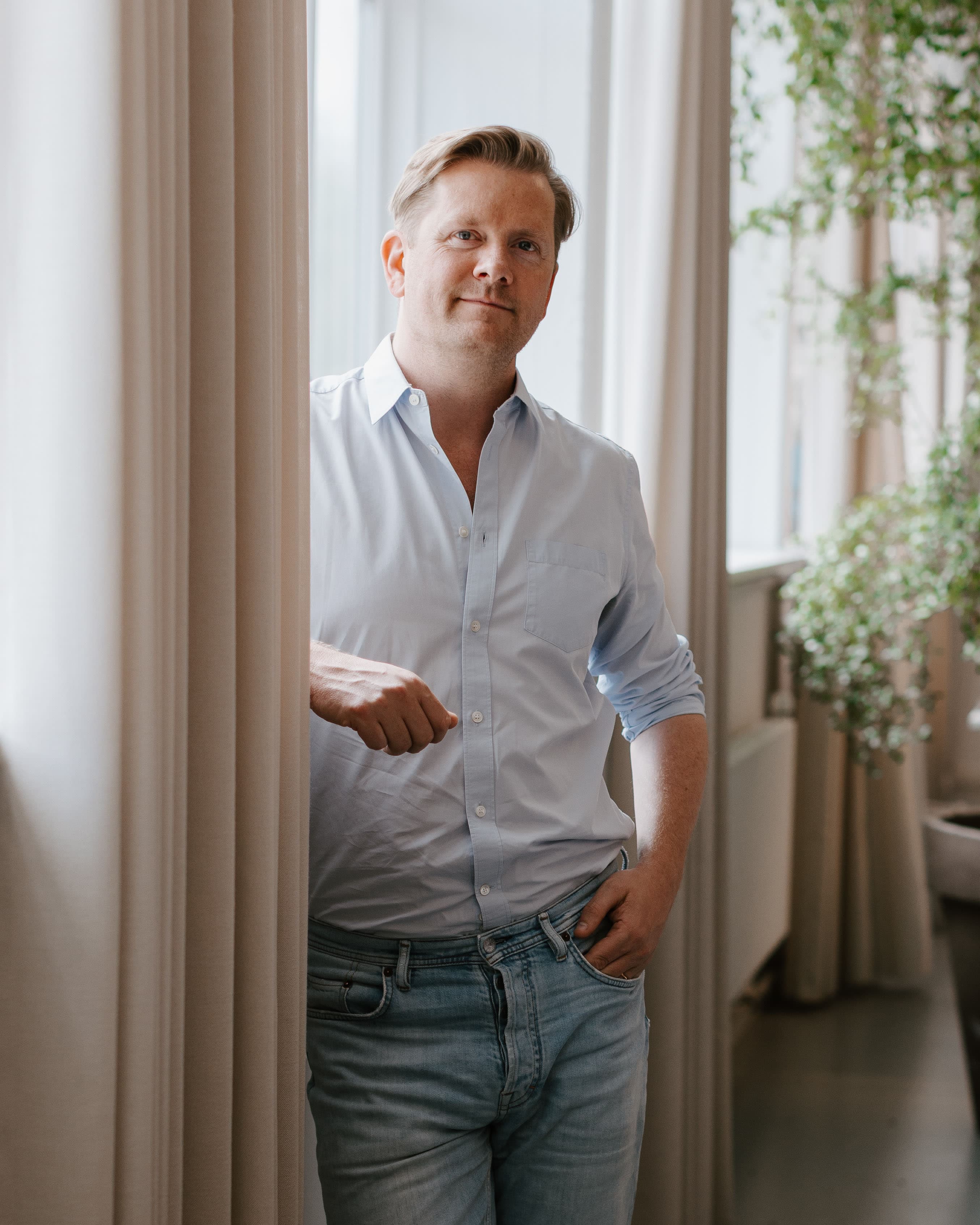
The light filters softly through the tall windows of the former warehouse on Lergravsvej in Copenhagen’s Amager district. It’s warm, unusually warm for a Scandinavian summer, and David Thulstrup offers a glass of water before guiding us through his open-plan studio.

Fifteen years ago, after stints in Paris and New York, David came home to Copenhagen and opened his studio. It wasn’t a grand announcement, more of a quiet return – something that felt inevitable. “I always knew I wanted to run my own studio,” he says. “And after all those years abroad, I needed to come back to something that felt familiar.”
Before the studio, there was a journey. He started out at The Danish Design School, studying space and design while working as a stylist. “That mix taught me about aesthetics in a tactile way – how materials and light interact,” he says. Paris came next, working for Jean Nouvel. Then New York, and Peter Marino. “Peter was a big influence. His attention to detail, his understanding of legacy – those things stayed with me.”

When he speaks about architecture, he doesn’t start with theory. He starts with people. “I don’t come to a project with a predefined idea. I ask questions. Who is this for? How will they live here? What do they need to feel at ease?” It’s an approach grounded not only in curiosity, but in care. “I think my strength is that I listen,” he says. “I don’t impose.”
The projects that have shaped him are often the ones where that trust ran deep. The house for Danish photographer Peter Krasilnikoff was one of them – his first major commission, turning an old garage into a sculptural, light-filled home. Then came Noma.

“When René called, he said he wanted the restaurant to feel like visiting someone’s home,” David recalls. “That immediately resonated with me.” The result was a deeply material-driven interior: a terrazzo floor made from Danish river and field stones, reclaimed oak submerged for 200 years, custom furniture and lighting, artworks curated to complete the experience. “It wasn’t about making something flashy, it was about creating a place where people could feel something.”
Even now, as Noma transforms into a research-focused food lab, he doesn’t see the space as finished or fixed. “It will keep evolving, and I love that. Good design ages well – it grows with time.”
The studio is busy these days. “We just completed two restaurants: one for The Macallan Estate in Scotland in collaboration with El Celler de Can Roca, and another in Copenhagen, the new location for Restaurant Alouette.” And then there are the private homes – quietly beautiful, deeply personal projects that he returns to with something close to reverence. “Each one is its own world,” he says.

Copenhagen, of course, runs through it all. “This city teaches you to care about detail,” he says. And yet, travel is equally vital to his process. “I always notice the journey to a place – the road, the light, how it reveals itself. That’s part of the design too.”
He doesn’t talk about legacy with grand words. But it’s there, in how he shapes a space, in what he chooses to leave behind. “I want to create buildings that belong – to their time, to their place, to the people who use them. And I want them to last.”
Læs mere
View All