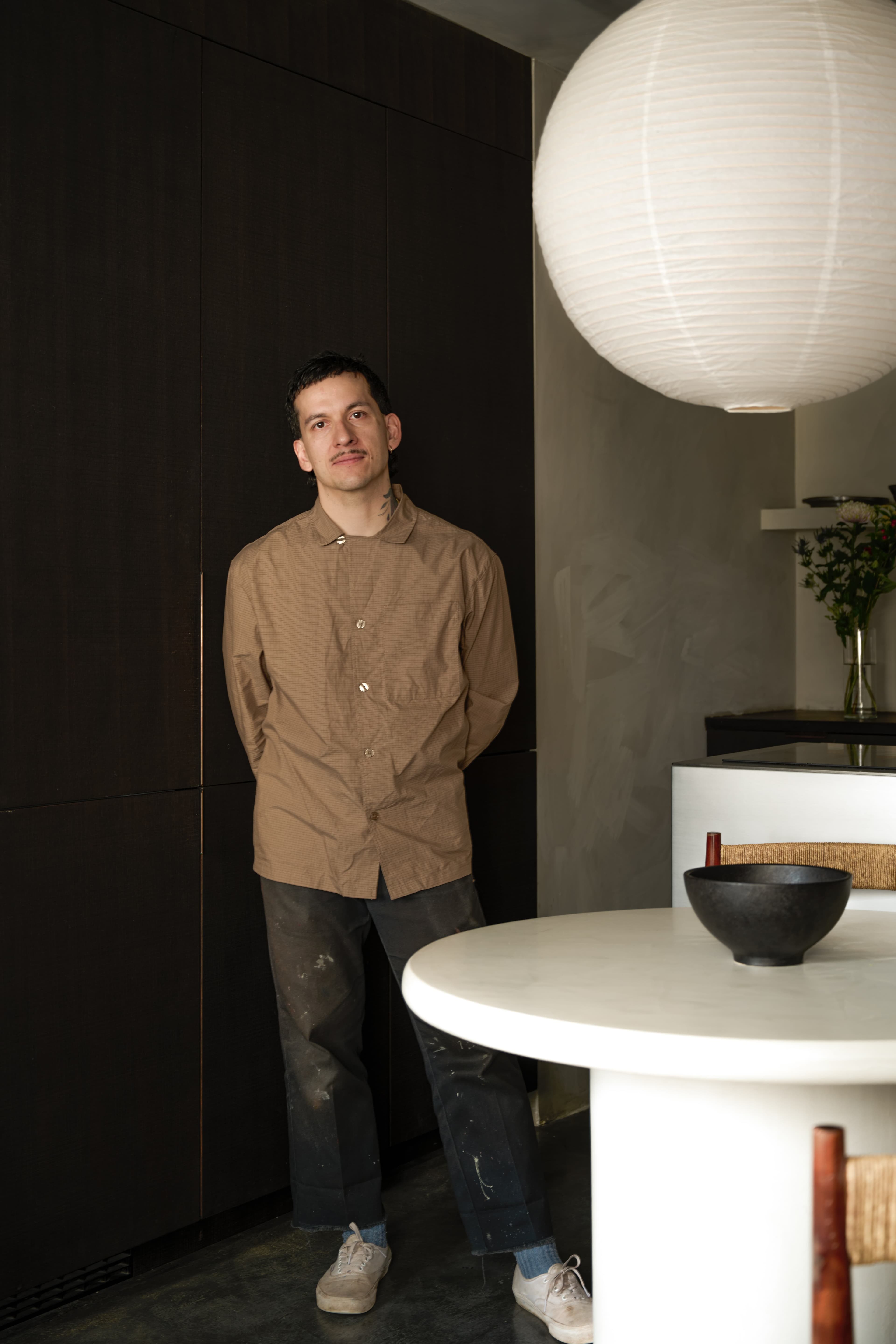
A Frank Chat with Studio B
Studio B Architecture + Interiors has long been recognized for its refined approach to contemporary residential design in Colorado, with work that is both grounded in its surroundings and deeply personal to each client. Founded in Aspen by Scott Lindenau and Susan Beardsley, the studio has built a reputation for thoughtful, site-driven homes that balance restraint with warmth.
Last year, longtime collaborators Kyle Burds and Sarah Harkins stepped into leadership of the firm, continuing to guide its evolution with a shared sensibility shaped by both Colorado and time spent working in New York. Their work builds on Studio B’s foundation while quietly expanding its perspective.
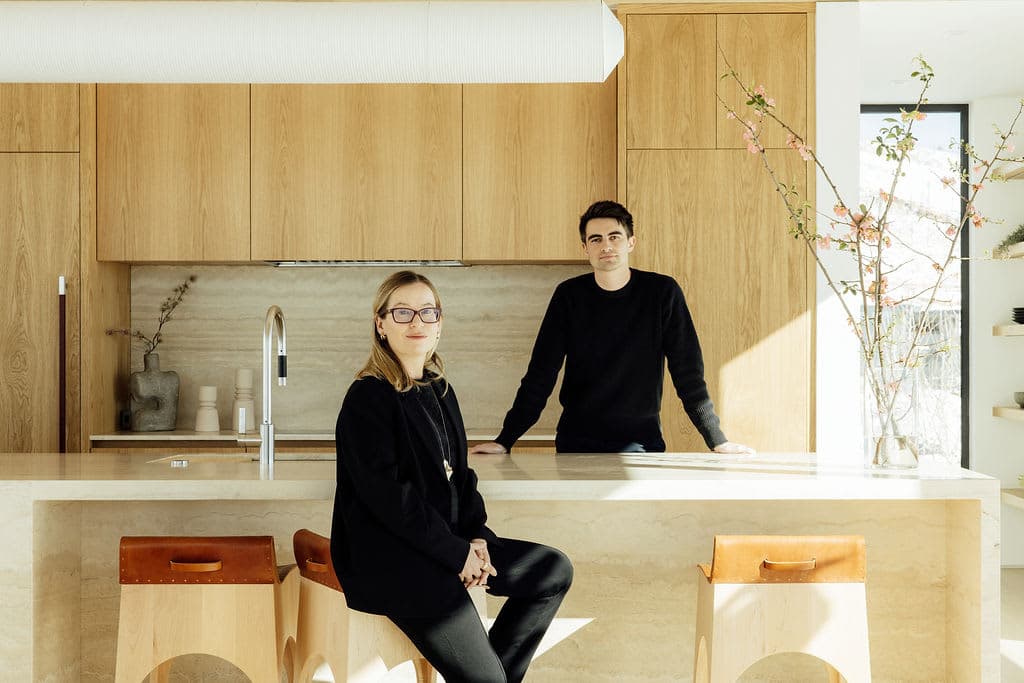
We recently photographed Kyle and Sarah at the Mountain Ridge Residence in Boulder and sat down to talk about their paths into architecture, what continues to influence their work, and how they’re thinking about the future of the studio.
Let’s start with your backgrounds—where did each of you grow up, and how long have you lived in Colorado?
SH: I grew up in Pennsylvania, and I’ve lived in Colorado 6 years now. Needless to say, the weather is significantly better here.
KB: I was born and raised in Colorado in the Denver suburbs, and I’ve lived here most of my life apart from my time in New York and abroad.

What initially drew you to the practice of architecture? Was there a specific moment, influence, or experience that compelled you to pursue this path?
SH: I loved art and math and found architecture to be the perfect combination of these two disciplines.
KB: I didn’t take a direct path into architecture. When I was young, I was fascinated by cars, both how they work and how they’re designed. I still have drawings from when I was a kid of the Ferrari F40. So, I started out studying mechanical engineering while also working part time as a graphic designer. I enjoyed both, but neither fully clicked. Graphic design didn’t feel tangible enough, and engineering felt too narrow.
Architecture was always something I was curious about, but I never saw it as a career path early on. It wasn’t until I toured the architecture school that I realized it perfectly combined the technical side with design, along with how people actually experience a space. Once I saw that, it just made sense. I transferred the next day and never looked back.
Where did you study architecture, and how did your education influence the way you approach design today?
SH: I studied architecture at Carnegie Mellon University. There was a strong focus on conceptual design and landscape sensitivity that has stayed with me.
KB: I studied at the University of Colorado Boulder in the environmental design program. It gave me a strong foundation in space planning and passive design. What really influenced my work, though, was spending time abroad, especially in Copenhagen. There’s a level of thoughtfulness in how buildings relate to everyday life there. It shaped how I think about working within different contexts.

You both spent time living and working in New York—what did that period give you? What were some of the most lasting lessons from that experience?
SH: New York is unlike any other city. The energy of the city is palpable. The cultural diversity is invigorating. The access to significant architectural buildings, both historic and new, is inspiring. But the tall buildings, crowded subways, and constant buzz made me crave nature. While the hustle mentality of the city has stayed with me, easier access to the outdoors was a non-negotiable for me long term.
KB: New York gave me a lot of perspective. The architecture is incredible, but what stood out more was the culture and the mix of people and ideas. You’re constantly surrounded by people doing things at a very high level, whether that’s in architecture, design, music, or food. It’s hard to be in that environment without wanting to push yourself, and that mindset certainly stuck with me.
Kyle, you started at Studio B early in your career, while Sarah, you joined after working in larger firms. What did the studio represent to each of you at that point in your lives?
SH: I had cut my teeth at some incredible, nationally recognized firms prior to finding Studio B. Those varied experiences brought clarity—shaping not only what I sought in my career, but equally what I knew to leave behind.
After moving to Colorado, a friend pointed out a particularly striking but understated home in their neighborhood. When I learned it was designed by Studio B, I felt a strong alignment with the work and knew it was where I wanted to be. Residential architecture, with its inherently personal and meaningful nature, resonates deeply with me, and Studio B’s design sensibility—marked by thoughtful detail and a sensitivity to site—felt like a natural fit. I haven’t looked back since.
KB: It represented opportunity. I was able to work on all aspects of a project right away, as long as I was willing to take it on. There was a bit of a trial by fire mentality that allowed me to learn quickly and take ownership in a way that not every office allows.
I could tell early on it was a place I could grow into long term, which is why I decided to leave for New York. I wanted to make sure I wasn’t just staying because it was comfortable, and that experience confirmed that Studio B was where I wanted to build my career.

Studio B often uses the language of “singular modern.” How do you interpret that idea today? What does it mean in practice?
SH: ‘Singular Modern’ means the design of this home is only for you (our client); inspired by your vision, needs, aesthetic, interests, family, and only in this place (the site); influenced by the topography, climate, views.
KB: A lot of people think this means we only do Modern, which is mostly true, but like Sarah said, it means, “Only for you, and only in this place”.
When you begin a new project, what tends to guide your earliest decisions—site, light, materials, the client, or something else entirely?
SH: It varies from project to project. I try to keep my mind open at the start of a project. In Colorado, views and the relationship to the surrounding landscape are often a leading design driver.
KB: All of the above, but our work is very client focused. Early on we’re exploring a range of ideas, whether they come from the site, its history, views, access, or materiality, or sometimes from something more personal to the client, like their interests, a place they love, or even a piece of art.
Where we land has to resonate with the client. For a project to be successful, it needs to feel personal to them and something they genuinely connect with.

Outside of architecture, what influences your work in quieter ways—travel, art, music, daily routines, or something else?
SH: Travel, it's addicting and enlightening. It stretches the capacity of your mind and challenges you to stay inspired.
KB: Travel and art both play a big role. Travel gives you perspective on how people live and build in different places, and art influences how I think about composition and material. A lot of it is subconscious. Things you’ve seen tend to resurface later in the process in ways you don’t always expect.
Looking ahead, what excites you most about the future—either for Studio B or for your own growth as designers?
SH: The power of an idea, and bringing that opportunity to people through the design of their home. I believe this process is the ultimate form of self actualization, and it’s a privilege to be able to work with clients to bring theirs to light.
KB: I’m excited about continuing to grow our work beyond Colorado. We’ve already worked on projects in different parts of the country, and each one brings a different set of conditions to respond to. The variety keeps things interesting and pushes the work in new directions.

Are there project types or scales you’re hoping to explore more of—whether that’s hospitality, commercial work, or something that pushes beyond your past focus?
SH: Wineries and museums.
KB: I’d love to work on a high end boutique hotel. The level of detail and focus on experience lines up well with how we approach residential work. It would be an interesting way to apply our skills in a different context.
Which cities, countries, or cultures outside the U.S. are currently capturing your attention? Where are you looking globally for design inspiration today?
KB: I really fell in love with Mexico City the last time I was there. Not everything translates directly to Colorado from a climate standpoint, but there’s a rawness and honesty to the work that really stuck with me. The way materials are used feels very natural and unpolished, which gives the architecture a lot of character.
SH: Australian architecture + design. From an outsider’s perspective, it appears that design is a highly valued and integral part of their culture.
Läs fler
Visa alla