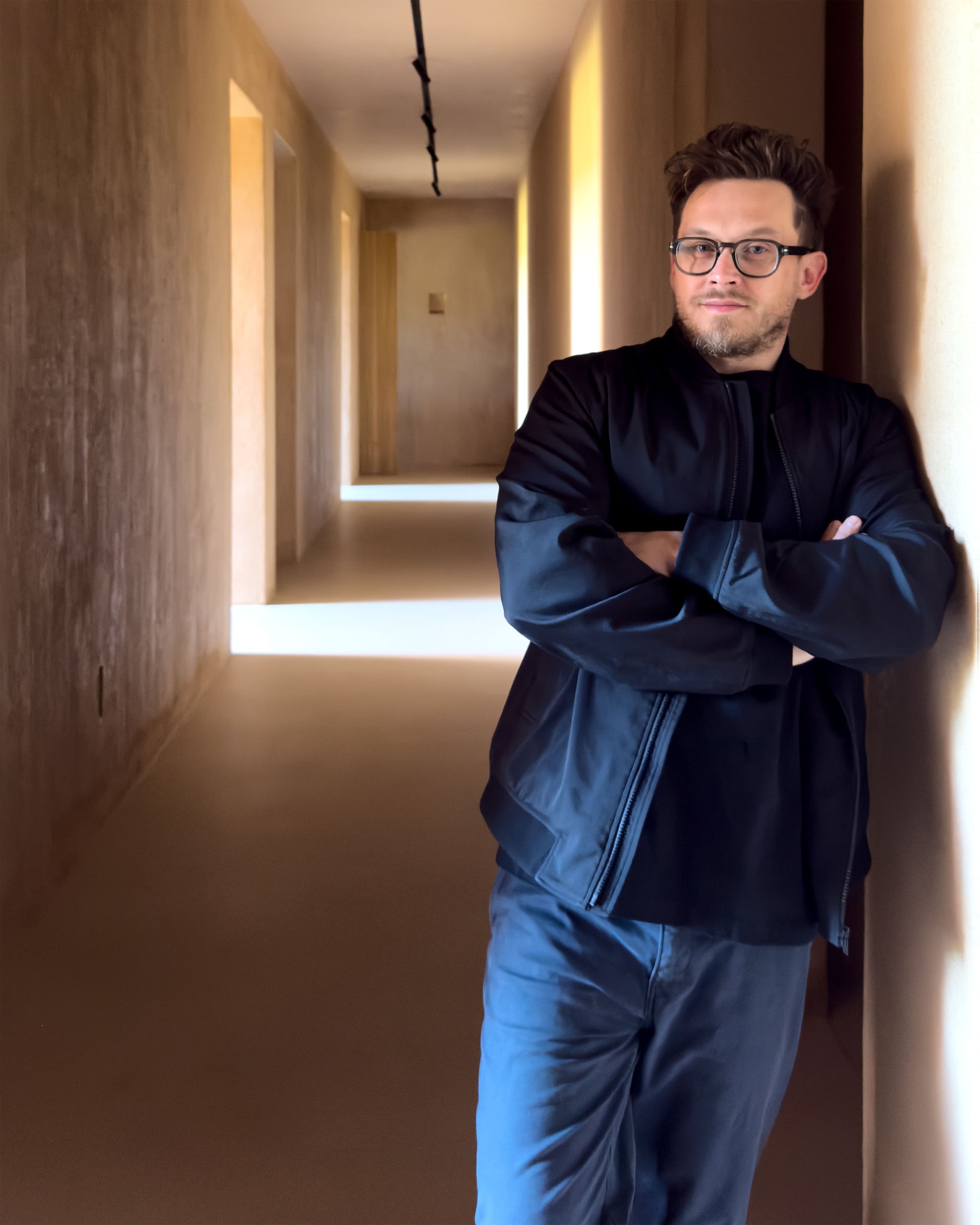
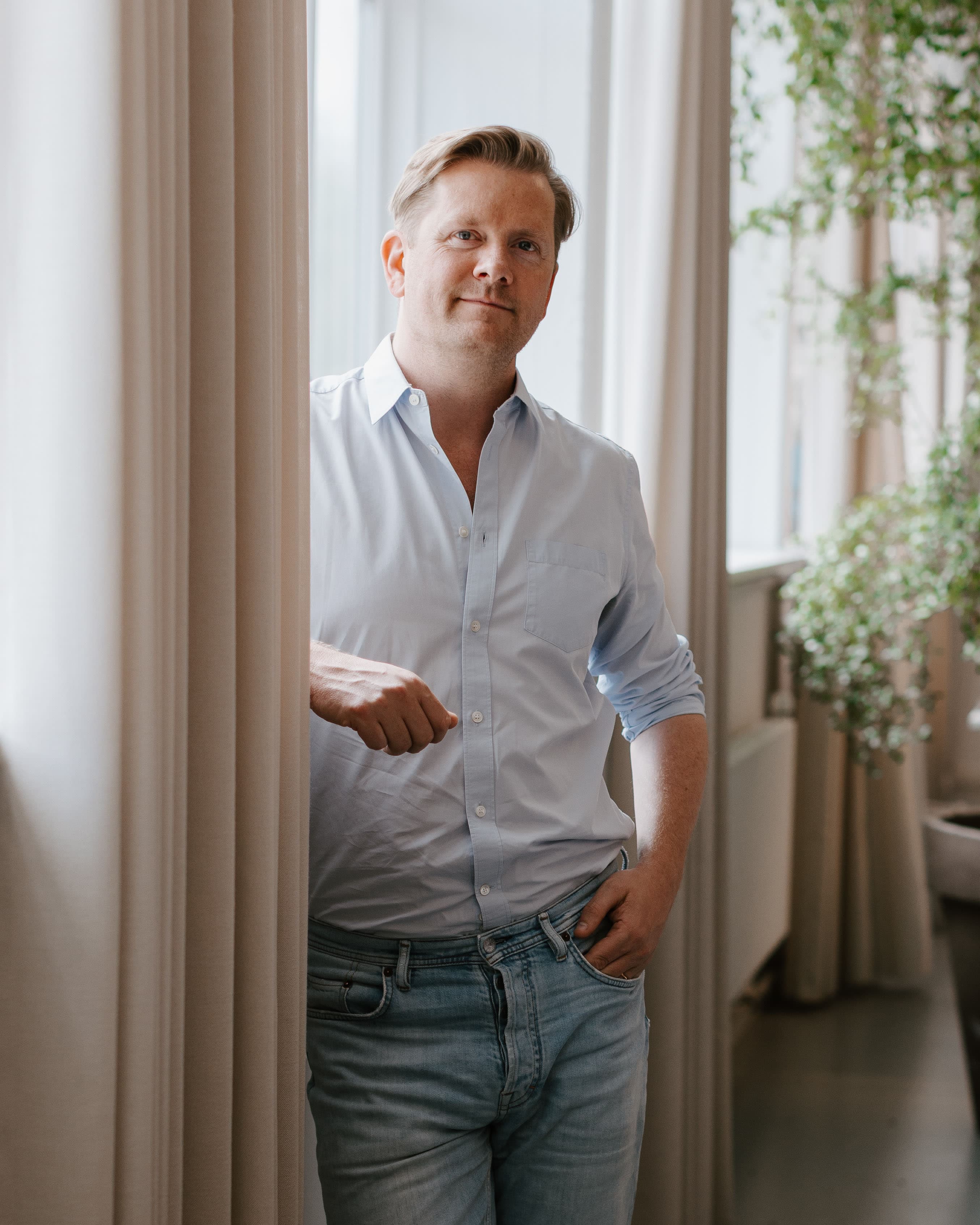
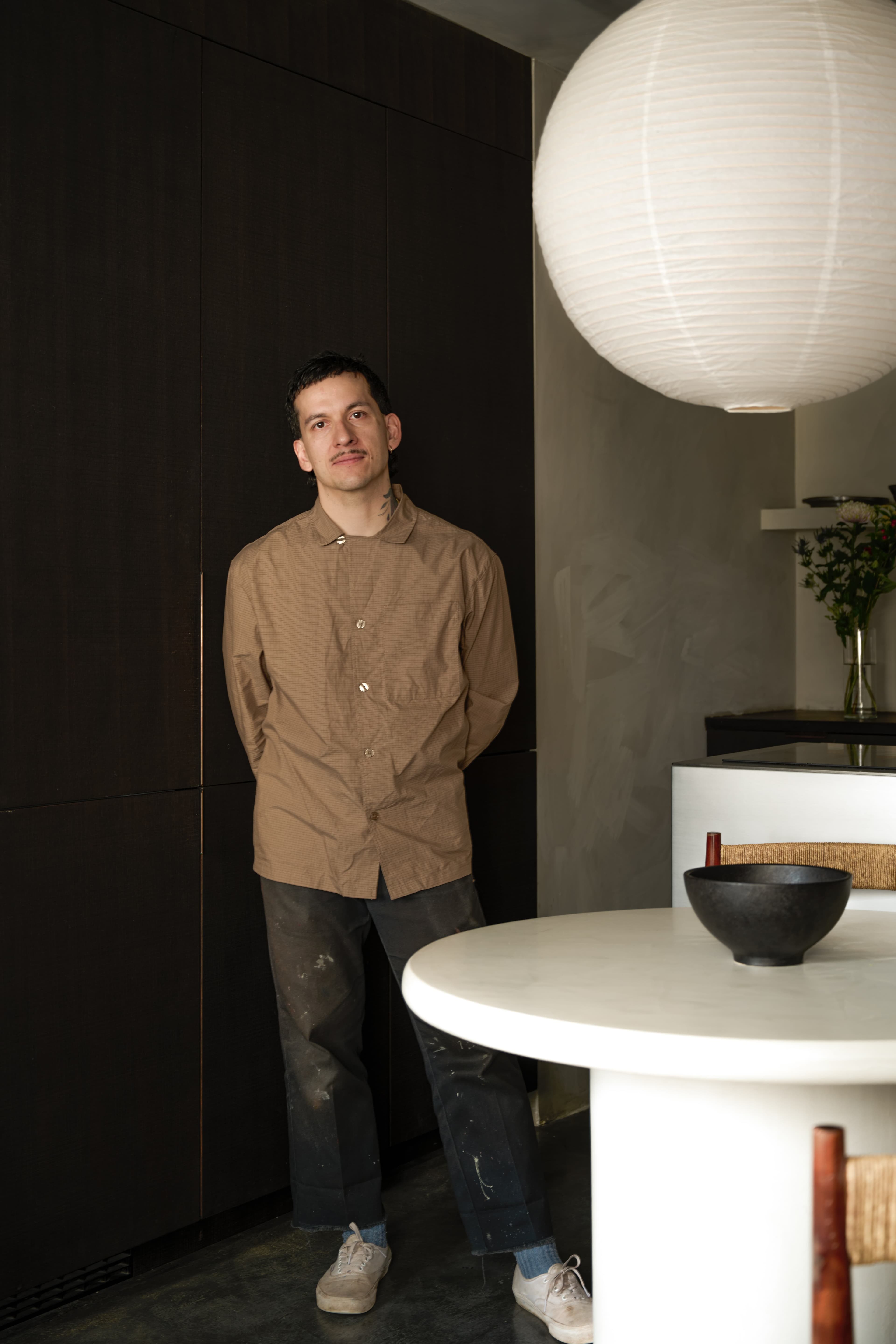
A Frank Chat with Bert Teunissen
Before his iconic work travels to the Rijksmuseum, renowned photographer Bert Teunissen brings his Domestic Landscapes to our listing at Emmastraat 38B for the first edition of Art & Estate.
In a property world often obsessed with the "new," Bert Teunissen’s work offers a profound counter-narrative. For decades, he has traveled Europe documenting interiors where time seems suspended, homes built not around electricity, but around the sun. His series, Domestic Landscapes, is a study of authenticity, memory, and the way light shapes how we live.
As we prepare to host an exclusive preview of this collection at our Emmastraat listing, we sat down with Bert to discuss the "mindfuck" of modern renovation, the magic of expired paper, and why a home is more than just square meters.
The "Domestic Landscapes" series captures interiors that feel almost lost in time. What are you looking for when you enter a home?
I am looking for a specific kind of architectural purity. I search for homes that originate from a time when daylight was the only source of light. Even if they have electricity now, the bones of the house, the layout, the function of the rooms, were dictated by the sun. These are spaces that haven’t been "styled" but have grown and merged with their inhabitants over decades. You find a homogeneous, natural situation there that is impossible to replicate in a modern build.


There is a deep personal history behind this project. How did it start?
It is a personal reconstruction of my past. I grew up in my grandfather’s house, a place with that specific atmosphere. When I was eight, my father decided to demolish it to build something modern. Entering that new house was a shock: a "mindfuck". I walked through the old front door, but behind it, everything was sterile and different. My history was gone.
Now, when I travel through Europe and step into these old homes, I am trying to find that lost atmosphere. It feels like putting on an old, comfortable coat.
Your lighting is your signature. You often speak of "Schimmen." What does that mean to you?
"Schimme" is a word we use in the Achterhoek, where I am from. It describes the transition from day to evening. I have this vivid memory of my grandfather hosting the village notables on Sundays. They would drink jenever and smoke cigars, and as the daylight faded, no one would turn on the lamps. The room would fill with a blanket of smoke, and everything became a silhouette. That magical moment, where you embrace the coming darkness instead of fighting it with artificial light, is what I try to capture.


In a digital age, you work strictly with analog equipment and often with expired paper. Why choose that difficulty?
Because digital has no boundaries, and I believe creativity needs limits. I use paper that might be from 1978; it’s "overdue" and unpredictable. It doesn’t do what it’s supposed to do anymore, and that is where the magic lies. Every mistake, every discoloration is a gift. It forces you to slow down. You can’t just click away: you have to wait and trust the process.
What can we learn from these landscapes?
That a home needs time to develop a soul. We are often too focused on speed and perfection. But the way light hits a room on a Sunday afternoon is more important than a pristine finish.
Art & Estate at Emmastraat
Bert Teunissen’s work reminds us that the most valuable aspect of a home is its character. We are proud to present Domestic Landscapes in a live setting at Emmastraat 38B, offering a unique dialogue between photography and architecture before the collection moves to the Rijksmuseum.
ART & ESTATE AT EMMASTRAAT - RSVP before Saturday, February 20th 2026
Mehr lesen
View All